
Executive Summary
It is inconvenient, expensive and occasionally unhealthy to eat fish to fulfil your daily omega-3 oil requirements.
Good-quality Fish oil extracted by elaborate processes can be a substitute.
Omega-3 oils — ALA, DHA and EPA — offer excellent anti-inflammatory benefits, which help in heart problems, arthritis issues, cancer management and brain disorders.
Our body cannot synthesise them, and has to acquire them through food.
ALA is present in plant sources, such as walnuts, flaxseed and chia seeds. Its shortage is rare in people with balanced diets.
DHA and EPA are exclusively available in animal foods, such as fish and shellfish. Its true deficiency is rare, but insufficiency is observed, especially in vegetarians.
Various healthcare associations advise people to consume fish to obtain DHA and EPA. In this article, I will discuss whether this is a workable option, especially in India.
Natural Omega-3 Sources
Not all fish varieties are rich in omega-3 oils. For example, shrimp, oysters, lobster, scallops, tuna, cod, sea bass and tilapia are poor sources of DHA and EPA.
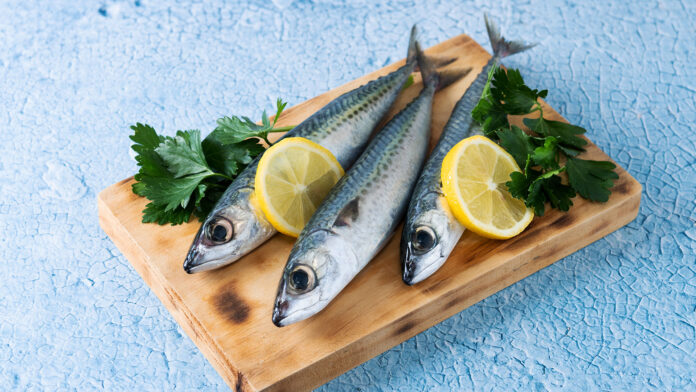
Cold-water fatty fishes such as salmon, herring, trout, sardines and mackerel contain high amounts of omega-3 oils.
In India, the options available are Indian salmon (Rawas), Indian mackerel (Bangda), Indian oil sardines and Himalayan rainbow trout.
The other sources are seal or whale blubber, and halibut or cod liver. Only an Eskimo can consume these daily.
Daily Recommended Amounts
It is difficult to assign a DHA and EPA intake amount for mitigating medical conditions. Clinical trials that help decide such numbers involve a variety of fish oils, diverse combinations of DHA and EPA, patients of different age groups, disease severity and treatment duration.
In the medical literature, the recommended daily amounts of DHA and EPA together are:
- Healthy adults: 500 mg (many health agencies)
- Osteoarthritis: 450 mg (by Arthritis Australia)
- Depression: 1400 mg (published in Psychiatry Research)
- Anxiety: 2000 mg (published in JAMA Network Open)
- Cognitive Decline and Memory Loss: 2300 mg (published in Expert Review in Neurotherapeutics)
- Rheumatoid Arthritis: 2700 mg (by Arthritis Australia)
- High Blood Pressure: 3000 mg (meta-analysis of 71 trials published in the Journal of the American Heart Association)
- High Triglycerides: 4000 mg (by the American Heart Association)
The latter few numbers indicate very high intake levels and should be taken only under medical guidance and supervision.
Since most adults have health concerns or wish to prevent them, 1000 mg of DHA plus EPA per day is a good and safe number to aim for. To reach that intake, let us see how much fish or shellfish should be eaten.
Daily Fish or Shellfish Consumption Needed
Based on the DHA and EPA found in various fishes, eat any of the following every day:
- 50 g Atlantic herring;
- 54 g Atlantic salmon;
- 73 g sardines;
- 83 g Atlantic mackerel;
- 101 g rainbow trout;
- 130 g sea bass;
- 160 g oysters;
- 354 g shrimp;
- 447 g tuna;
- 500 g lobster;
- 567 g scallops;
- 607 g cod; or
- 772 g tilapia.
All look impractical or expensive, except the first few entries.
Incidentally, companies selling eggs claim that ‘eggs are rich in DHA’, which is just marketing talk. You need to eat 2833 g of eggs to fulfil the above requirements. That would be five dozen eggs a day.
There are special DHA-enriched eggs, which hens lay when fed DHA-rich microalgae or marine-derived oils. Such eggs have a much higher cost, which may be a good tradeoff if just 3–4 such eggs can provide 1000 mg of EPA plus DHA.
Coming back to our fishes, all varieties face another challenge: Environmental pollutant contamination.
Heavy Metal and PCB Contamination
- Large and long-lived fishes, such as king mackerel, shark, swordfish, tilefish, northern pike, marlin, bass, and tuna, tend to accumulate mercury. Eating them can cause toxicity, long-term brain damage and heart disorders.
- Carp and mullets have a high concentration of cadmium, another harmful heavy metal.
- Salmon grown on fish farms, mackerel and herring can contain high levels of polychlorinated biphenyls (PCBs) and dioxins, which are highly toxic pollutants that can lead to cancer, developmental problems, immune disorders and reproductive system problems over the long term.
So, what is the alternative to eating fish to get omega-3 oils?
Fish Oil
Consider fish oils extracted from salmon, anchovies, krill, flounder, tuna, haddock or cod. They are filtered to remove their pollutant contaminants and are available in the market as supplements.
Caution: Cod liver oil is not recommended since it contains high amounts of vitamin A, which can lead to toxicity.
In a separate article, I will explain why the best quality fish oil supplements are far more expensive than the good ones, the reason being the fish oil filtration method. If a fish processor uses a shortcut or a cheap process, the extracted fish oil may be unhealthy.
Summary
It is inconvenient, expensive and occasionally unhealthy to eat fish to fulfil your omega-3 oil requirements.
To Read More
- Medical News Today: How much omega-3 should you get each day?
- American Heart Association: Are you getting enough omega-3 fatty acids?
- National Institutes of Health: Omega-3 Fatty Acids: Fact Sheet for Health Professionals
- Healthline: How Much Omega-3 Should You Take per Day?
- On this website: Omega-3 Oils: A Complete Guide
- Evidence-Based Medicine Consult: Fish Oil (Omega-3 Fatty Acid) Supplements and Mercury Content
- US Food and Drug Administration: Mercury Levels in Commercial Fish and Shellfish (1990-2012)
First Published on: 9th August 2025
Image credit: chandlervid85 on Freepik